



Like us on Facebook

 photo Final-About.png photo Final-MenuYA.png photo Final-MenuGoAway.png photo Final-MenuContact.png

Wednesday, June 29, 2011

RTW: Best Book of June


Road Trip Wednesday is a blog carnival, where YA Highway’s contributors and readers post a weekly writing- or reading-related question and answer it on our own blogs. You can hop from destination to destination and get everybody’s take on the topic.

This week’s prompt was: What's the best book you've read this month?

Well that’s not hard. But since I’ve already blogged about The Best Book I’ve Read In June, how about another book I’ve read and liked yet somewhat less than The Best Book?

From Goodreads: For seventeen-year-old Emerson Cole, life is about seeing what isn’t there: swooning Southern Belles; soldiers long forgotten; a haunting jazz trio that vanishes in an instant. Plagued by phantoms since her parents’ death, she just wants the apparitions to stop so she can be normal. She’s tried everything, but the visions keep coming back.

So when her well-meaning brother brings in a consultant from a secretive organization called the Hourglass, Emerson’s willing to try one last cure. But meeting Michael Weaver may not only change her future, it may change her past.

Who is this dark, mysterious, sympathetic guy, barely older than Emerson herself, who seems to believe every crazy word she says? Why does an electric charge seem to run through the room whenever he’s around? And why is he so insistent that he needs her help to prevent a death that never should have happened?

 First, let’s talk about the cover. I’m pretty sure that if I hadn’t heard anything about Hourglass that I’d still pick up the book based on this crazy cover. It’s not just that it’s beautifully designed, but also that it made me wonder what the heck was going on.

Now that the obvious is out of the way… I really enjoyed this story. For some reason, I had gotten it into my head that Hourglass was paranormal YA, but to be honest it’s really a balanced mix of paranormal and sci-fi, which I like. There’s time travel and kids with superpowers at a special home to hone their talents. I was half expecting Professor Xavier to start conducting a lesson.

There’s also hot boys and kissing, suspense, action, and—get this—a satisfying ending even though there will be a sequel. (Not that I don’t like cliffhanger endings, but I’m also wildly impatient and having things wrap up nicely is much more satisfying in the interim.)

I will say, this is the first time I’ve rooted for the obvious loser in a romantic triangle. I knew while reading who she’d pick—I read YA after all; it wasn’t rocket science—but for the first time I was really hoping she’d get with the other guy. So, I guess Hourglass turned me partially insane.

Despite the crazy-turning, it’s a fun read and I’ll be looking out for the second book.

What’s the best book you’ve read this month?*

*Translation: I’m always looking for great books, so leave your June recommendations in the comments. Also, other people can see them and benefit. See, this question isn’t just here for selfish reasons...

Monday, June 27, 2011

The Rules

I would write in the third person. I decided this after reading countless posts and articles by Important People that said certain Rules worked the best and, well, writers who didn’t follow them were weenies.*

Not really. But you know what I’m talking about.

Third person it was. It didn’t matter that there are a ton of YA novels written in first. According to the Important People, most people screwed up the first person. I needed to write in third.

Only when I did, I couldn’t get into the story. It was as if my characters didn’t want me to get to know them. I yelled for them to pay attention to me since I WAS THE WRITER! Apparently characters don’t really care about that. Seriously, they hate being told what to do.

So one day, in a frustrated attempt to get inside my main character’s head, I opened a blank document and did a free write from her point of view. The words? They just poured out. And they kept pouring out until I reached the end.

Moral of the story? People who follow The Rules religiously—about outlining or not outlining, about deleting every single adverb, about starting a book with dialog or someone waking up—instead of following their story are the real weenies.**

Have you ever tried to follow a Rule but find doing so doesn’t make your story better?

Update: I just read this post from Scott Egan, and speaking of rule breaking...


*And now I’ve lived my dream of using that word online.
** Twice! Dreams do come true.

Wednesday, June 22, 2011

RTW: Fire

Road Trip Wednesday is a blog carnival, where YA Highway’s contributors and readers post a weekly writing- or reading-related question and answer it on our own blogs. You can hop from destination to destination and get everybody’s take on the topic.
This week’s prompt was: The house is on fire and you've only got time to grab five things. What are they?

I’d like to say I’d grab the following five things, but let’s be honest: I’d make for the nearest exit and bolt. I’ve watched enough movies to know that people who go back for their belongings end up dead.* Unless Spiderman’s involved.

So, taking into account the fact that I wouldn’t have enough time or brain capacity to search for my most favoritest possessions, here’s what I would like to take provided the fire is contained and the toxic smoke hasn’t started killing my brain cells:

1. My computer. I’m sure I’m not the only one who will say this, but c’mon. I really don’t feel like writing my entire manuscript ALL OVER AGAIN. And I especially don’t feel like writing it all over again from the burn unit of the hospital.

2. My cell phone and charger. Because I’m going to need to call my family and let them know I’ve been burnt to a crisp. Also, it will be useful for finding a place to crash should I miraculously escape without burns or lung damage from smoke inhalation.

3. My fan. Here’s something you don’t know about me: I have a disease that makes my feet burn like they’re on fire when the temperature is over 65. First, this is why having a fire in my house is possibly the worst thing that could happen to me. Second, I’m well-versed in second-degree burns (thanks, body) and know for a fact I’d rather lose all my possessions than acquire more burns than I already have. HOWEVER, if I’m going to be away from home for a while, I’ll need my fan for my feet. Because the only thing worse than self-burning is self-burning while you have second-degree burns. Trust me.

4. My glasses. When you’re in the middle of getting skin grafts (because you stupidly ran through the fire trying to save your belongings) you really don’t want to worry about putting in contacts. And even if I escape the fire, I’ll need glasses to see. Once I take out my contacts I’m basically blind.

5. My husband. Yeah, it’s way more likely he’d be saving me. But in case he trips or gets hit on the head by a falling beam (not that my apartment has any exposed beams, but in movie fires someone is always knocked unconscious) I’d go back for him. He’s probably the only thing I’d run back for in a real-life situation.

What about you? What five things would you save?

*Okay, so I may have a pessimistic outlook on fires. I just hate them with a fiery passion. (See what I did there? Hardee har har.)

Monday, June 20, 2011

Best App For Journalists (Or Spies)

 My search for a phone call recorder has lasted approximately five years, give or take a few weeks. As a young reporter, the prospect of finding a way to record phone interviews seemed easy. I mean, other journalists did it, right?

Right. Only the phone at my last job was incompatible with the kind of voice recorder you can buy on a journalist’s salary. (The irony hasn’t escaped me.) I struck out again at my current job, and gave up once the IT department couldn’t even provide me with a working hands-free headset. Sigh.

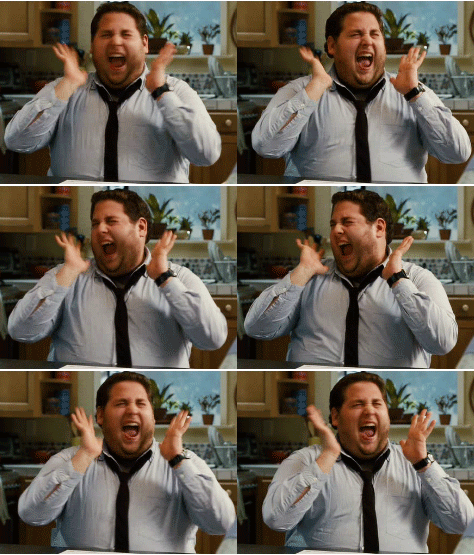
So even though I’ll do my best to describe the excitement I felt the first time I used Recorder for iPhone, know that my squeals of joy were much, much louder than you’re imagining. The discovery processess looked a lot like this:


If you’re a journalist (or if you want to do some down-and-dirty research for a story by interviewing experts who live too far to visit in person), Recorder will change your life. Here’s how it works:

1.     Add money to your balance via your iTunes account.
2.     Place the call through the Recorder app.
3.     Recorder will call the number for you and begin recording as the phone rings.*
4.     Chitchat without worrying your call won’t record.
5.     When you’re done, the call will download to the app.
6.     Play the call in the app, email it (if it’s not too large of a file size), or download to your computer.
7.     To download, wirelessly sync your phone to the Internet, then type into your browser the URL provided by Recorder.
8.     Click download.
9.     Save the file to your computer and play in iTunes.
10.  Smile real big.


* I feel obligated to tell you** that, being well-versed in the primary reason it’s hard to find call recording devices, I know the laws pertaining to call recording. In some states (forgive me for forgetting which ones), it’s illegal to record a call without telling the person on the other end of the line that you’re recording.

** So don’t ask me to bail you out when you forget to heed my sage advice, grasshopper.

Friday, June 17, 2011

This Is Not a Review of Chime


I’m not going to review Chime. I won’t tell you how I bought the book after others raved about it, or how it’s a good thing I heard the news since I might not have picked it up on my own, what with a cover that looks like every other young adult paranormal romance.

I won’t tell you how insanely stupid I was to think this was A. a paranormal romance or B. like any other book.

I’d be foolish of me to go on and on about Franny Billingsley’s lyrical prose and the way she conjures images effortlessly. The way she creates a world that’s at once magical and foreign and at the same time real, like a page out of history.

A lot of reviewers would probably mention the way the story is flawlessly stitched together or how each page is filled with mystery and beauty and the feeling of evil hiding in the dark places. But I’m not going to.

Everyone always asks about the romance, but I don’t plan on telling you anything about it. And that’s the truth.

Most of all, I’ll never explain how Chime touches on self-acceptance and guilt and hate in a way no other young adult book does. It would be pointless for me to do so.

Because reviewing Chime is a waste of time, especially since no review can explain the book’s perfection. Especially when five words say it all: Go. Buy. This. Book. Now.

Sunday, June 12, 2011

The Wrong Name


So I’ve been brainstorming this new project, and one of the things I do as I get to know my main character is name him or her. I do this for two reasons:

1.     The name needs to fit with the story and the character’s personality. (Because, like it or not, we associate names with types of people or cultures—or worlds if we're talking fiction.)
2.     I can avoid writing “the MC” or “the girl” in all of my notes.

I didn’t say I was good at this.

For my current WIP, I named my main character Wren while brainstorming, but when I went to write the novel I realized she was really an Alex. I think I know why I’m so indecisive on the name front.

I blame my parents.

See, I was named Jessica. Even before I was born, my parents were sure: I was Jessica.

When I was born, my parents ooohed and ahhhed over baby Jessica. My grandparents brought stuffed animals and blankets addressed to baby Jessica.

Yet a couple days later (back in my day, the hospital didn’t throw you out on your butt a day after delivery), they decided that, nope, their baby definitely wasn’t a Jessica. She was a Tracey.

We stayed in the hospital an extra day as the paperwork was shredded and fixed. They got to know me as Tracey. I’ve never been anything else but Tracey. Still, I wonder if my personality would have been different had I been a Jessica (along with every other baby in the ’80s).

Or did my parents see my personality in those first few days and realize—like I realized with my character—that the personality didn’t fit the name? I’m not sure. (And I’m quite aware I just compared my baby self to a fictional character.)

There’s one downside to this baby story, though. I’ll spend my life explaining that Tracey has an e.

No one misspells Jessica.

Friday, June 10, 2011

First Lines: How 4 Books Stack Up

Thank goodness for Amazon’s Look Inside feature. I won’t divulge the number of hours I’ve spent reading the first line of any young adult book I could get my hands on, but I will say it was in the double digits.

Instead of reviewing one of the books I’ve read recently I’d briefly tell you about each one. And, taking after Jen, I’ll reveal their first lines first.

Think about which of the following you’re most likely to pick up:

1. Dear Ginger, I have never been a great follower of rules.
2. “Where is she?” I asked Mrs. Casnoff.
3. Every morning I wake up and I tell myself this: It’s just one day, one twenty-four-hour period to get yourself through.
4. It has been sixty-four years since the president and the Consortium identified love as a disease, and forty-three since the scientists perfected a cure.

And for the great reveal...

Number 1: Dear Ginger, I have never been a great follower of rules.


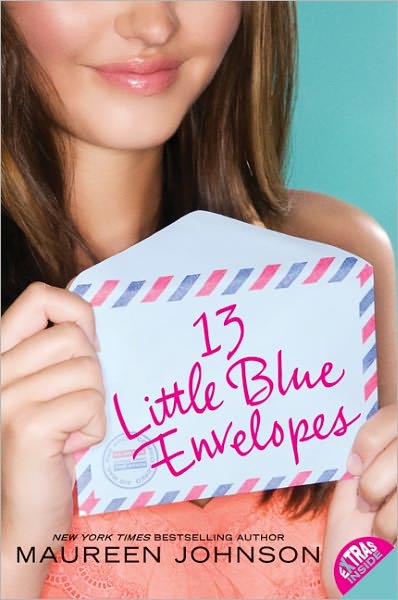
13 Little Blue Envelopes by Maureen Johnson
Anyone with a serious case of wanderlust will love this book. The main character, Ginny, receives 13 envelopes from her aunt, who recently died. As she follows her aunt’s written instructions, she travels through Europe and learns who her aunt really was. This made me re-live my post-college trip around Europe—and check flight prices online.

Number 2: “Where is she?” I asked Mrs. Casnoff.


Demonglass by Rachel Hawkins
If you liked Hex Hall, you’ll like the sequel, Demonglass. I love Sophie’s attitude, which I also liked in the first book. But plot-wise, I found this one more interesting and an overall better book.

Number 3: Every morning I wake up and I tell myself this: It’s just one day, one twenty-four-hour period to get yourself through.


Where She Went by Gayle Forman
There’s really not much I can say about this book besides BUY IT RIGHT NOW. I was so worried this would wreck the awesomeness that was If I Stay, but it only made the story that much better.

Number 4: 4. It has been sixty-four years since the president and the Consortium identified love as a disease, and forty-three since the scientists perfected a cure.


Delirium by Lauren Oliver
To be honest, I had a few issues with this book. For one, I just can’t believe a society would consider love a disease. When I put that out of my mind, the references to things as commonplace as Mad Libs took me out of the world. But overall I really liked this book. Oliver’s prose is beautiful, and the love story just right. And the ending? Tears.

Which one of these would you have picked up based on its first line alone? (That is, without knowing which book it is or whether it’s been hyped forever.)

Wednesday, June 8, 2011

RTW: Plotter Versus Pantster

Road Trip Wednesday is a blog carnival, where YA Highway’s contributors and readers post a weekly writing- or reading-related question and answer it on our own blogs. You can hop from destination to destination and get everybody’s take on the topic.

This week’s prompt was: Are you a plotter or a pantser?

I suppose I’m a mix of both. Does that make me a plotser? A pantter? Some other mash up of the two words? I don’t know.

Here’s how I work, in a nutshell: As I’m brainstorming my idea, I’ll take notes in a file of possible complications and reactions, scenes, characters, character traits, and so on. Before I start writing, I have the basic storyline in my mind. (Remember how I told you I view it like a movie in my head? I can’t write until I can daydream a few scenes from the story. I won’t deny it if you call me insane.) I need to know the beginning, the end, and at least five key scenes along the way. After that, it’s pantsing all the way.

But change is afoot. My next idea is too complicated to write like that, so I’m taking the plunge and outlining it. At first I was intimidated, but now I have a great routine. First, I stare at the computer.

Then I stare more.

And then keep staring.

Oh, and when I’m done with that, I shrug it off for another day. If anyone has a more, um, productive method, I’d be happy to hear it.

I’ll be honest: I much prefer to come up with scenes as I’m writing. Still, outlining can organize thoughts, which is what I majorly need right now. I’m hoping that some time before 2015 I’ll have it done. If I’m not finished by then, send supplies. Food is preferred.

Are you a plotter or a pantster—or a mutt?

Also. I’m inching toward 250 blog followers, and you know what happens when I hit 250: An awesome blog contest! But wait, there’s more! I hit 300 followers on Twitter. Since I promised to up the ante should I meet the Twitter goal before the blog goal, it’s now turned into CONTEST OF AWESOME SQUARED. I’ll announce the prizes when number 250 signs up. 

Monday, June 6, 2011

The Life of the Writer

INT.  TRACEY’S APARTMENT - NOV. 2010 - NIGHT

Tracey flops down on the couch next to The Man.

TRACEY
I’m going to write a book.

THE MAN
I’ll read it when you’re done.

TRACEY
Sounds great!


INT.  TRACEY’S KITCHEN – DEC. 2010 – NIGHT

Tracey dances a jig in the kitchen. It resembles flailing more than dancing. The Man looks on, confused.

TRACEY
I finished the first draft!

THE MAN
So when can you publish it?

Tracey stops dancing. She takes a swig of water, then sits on the floor.

TRACEY
I don’t know, forever? You don’t just finish a novel and send it off.

THE MAN
Why not?


INT. TRACEY’S LIVING ROOM – MARCH. 2011 – EVENING

Tracey’s on the couch. She’s talking on her cell phone.

TRACEY’S MOM
So, when is your book going to be ready?

TRACEY
I’m still revising it. It’ll be a while, Mom

TRACEY’S MOM
Well hurry up!


INT. TRACEY’S LIVING ROOM – MAY 2011 – DAY

The Man comes home from work, kicking his shoes off so they fall in the middle of the hallway. The Man approaches Tracey, who is typing at her computer.

TRACEY
How was your day?

THE MAN
Good. Tiring. Yours?

TRACEY
I got a ton of writing done tonight.

THE MAN
For your book? So is it ready to publish?

Tracey rolls her eyes and returns to the screen in front of her.


INT. TRACEY’S BEDROOM – JUNE 2011 – DAY

Tracey lies on the bed. She’s talking to her mother.

TRACEY’S MOM
So your sister told me you sent her the story again.

TRACEY
Yeah, I made a ton of revisions.

TRACEY’S MOM
After that you’re done?

TRACEY
Not even close. These are just my first revisions.

TRACEY’S MOM
Oh come on, I’m dying to read it. Hurry up.

TRACEY
I’ll do my best.

Tracey sighs.

Friday, June 3, 2011

8 Tips for Better Self-Editing


Since I’ve been wading in the Sea of Revisions, I thought I’d share some of my editing tips. We all edit differently and I always find it interesting to hear how others do it. I thought you might, too. (Don’t tell me if I’m wrong.)

1. Read the manuscript aloud. I’m sure you’ve heard this one before, but for me it’s critical. That’s how I determine if the rhythm of the sentences or paragraphs is off. It’s also how I catch stupid typos when Microsoft Word lets me down. (I mean, are and our aren’t replaceable—even if they’re both spelled correctly.)

2. Take time away. Like a good rebound relationship, revisions work best after you’ve taken some time away from the game. There’s a 500 percent chance that a couple weeks or more away from your manuscript will make you a better editor. Also, that comprehensive critique will seem a lot less critical and much more helpful after you’ve digested everything.

3. Highlight all of the verbs. This will be tedious. I promise. But your work will be stronger for it. Take out that pretty yellow highlighter and mark up each and every verb. When you go back and review the highlights, look for any weak verbs and replace with stronger ones. Also check for verb-adverb constructions and change them to stronger verbs.

4. Circle all metaphors and similes. Check to make sure you’re using the correct metaphor or simile for your character. A character who spends his summers mowing laws would probably describe freshly mowed grass differently than someone who grew up in the city.

5. Cut any scene that isn’t furthering the plot, character arc or, better yet, both. You can preserve the BEST WRITING YOU’VE EVER DONE by copying and pasting it into a new document. Tell yourself you’ll add it back. Then read the scenes and pat yourself on the back for how much better the story sounds.

6. Make a pass for every character. Listen, each character should act as if they’re the main character of the story. Because to them, they are. In a story about me, the mechanic who works on my car is a side character. But I’m a side character in his story, too. Everyone is the main character of their own story.

7. Check for character voice. Paste a chunk of dialog into a new document. Remove the dialog tags. Can you tell the difference between characters from the dialog? Everyone speaks differently, and so should your characters. Make sure yours don’t all sound like the narrator.

8. Do a pass for first and lasts. Make sure the beginning and end of each chapter and scene stand out. These can get overlooked, but they should be handled with just as much care as you do the first and last line of the book.

That’s all for now. What are your self-editing tips?

Wednesday, June 1, 2011

RTW: Why the Feds May Be Out to Get Me

Road Trip Wednesday is a blog carnival, where YA Highway’s contributors and readers post a weekly writing- or reading-related question and answer it on our own blogs. You can hop from destination to destination and get everybody’s take on the topic.

This week’s prompt was: What is the strangest/weirdest thing you’ve ever researched?

I’m 98.6 percent sure I’m on the government’s terrorist watch list for googling such things as:

History of chemical weapons
Elements of chemical warfare
Types of chemicals used in nerve gas
Plutonium production
Where to mine for plutonium

And then they’d probably see these and think I was also your average, everyday murderer:

How to kill someone in the hospital without the machines alerting the nurses
How to break out of a locked room with no windows or vents*
How to break out of prison

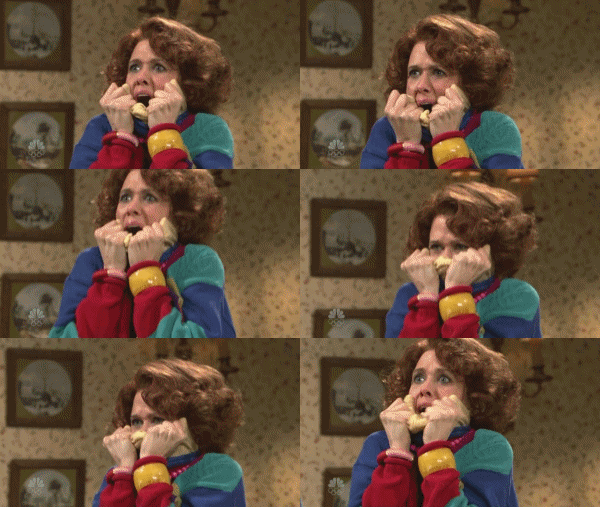
I add a liberal dose of what I like to call “innocent googling” to balance the scales—for things like “steps to creating world peace” or “I hate murder.” Also, I search for a lot of things like this:


You can never be too careful.

What’s the strangest thing you’ve ever researched?

*Incidentally, the Internet was useless on this and I had to come up with my own trick.